If you buy or remodel in Sunset Cliffs, the view is not just a bonus. It is often the starting point for the entire home. In a bluff-top coastal setting shaped by ocean horizons, marine-layer mornings, and dramatic shoreline conditions, smart design means thinking beyond pretty windows and asking how every room, material, and layout choice supports the Pacific outlook. Let’s dive in.
Why the view drives everything
Sunset Cliffs Natural Park stretches along the western edge of Point Loma as a bluff-top coastal landscape known for carved bluffs, sea caves, arches, and sweeping ocean views. The setting gives the neighborhood a strong visual identity, and that identity often shapes how homes are designed, updated, and marketed.
In practical terms, the horizon becomes a planning tool. Instead of treating the ocean as something you notice only after you walk outside, the best homes organize daily living around it. That usually means placing the spaces you use most where the outlook feels strongest and most natural.
Plan rooms around the ocean side
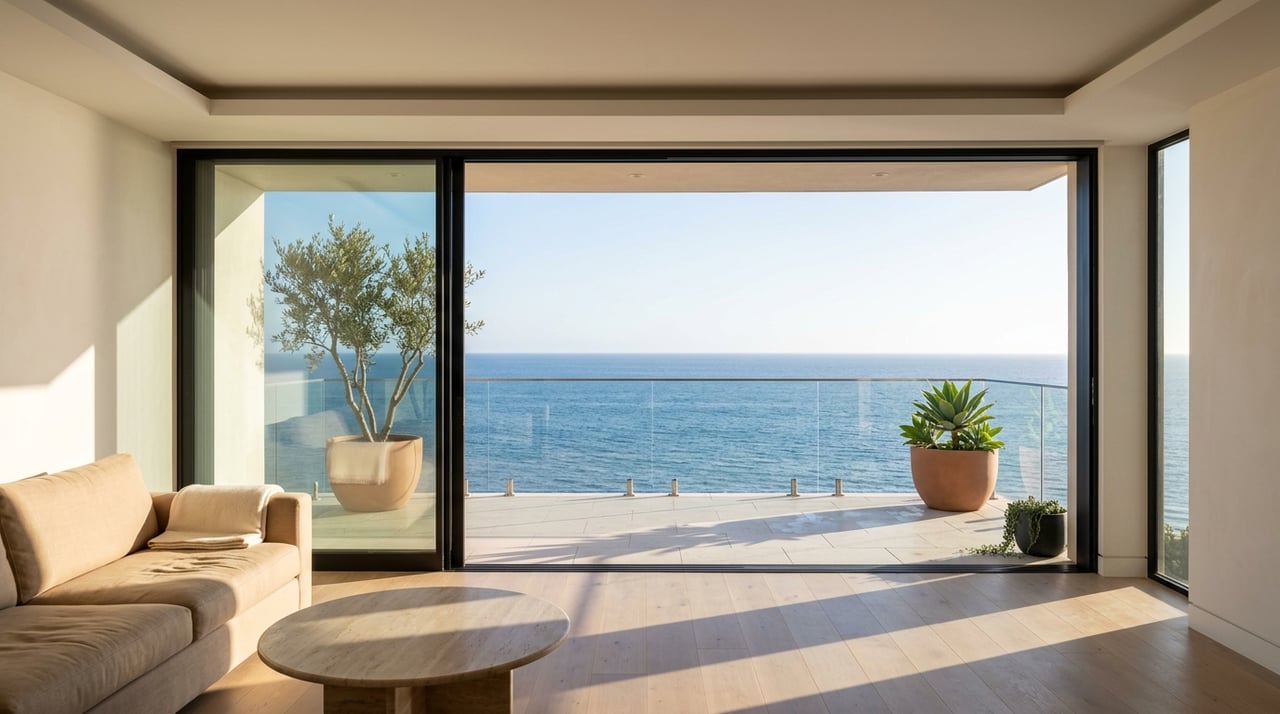
One of the clearest design moves in a view-driven home is to place the main living spaces on the ocean-facing side. In Sunset Cliffs, that often means the living room, dining area, kitchen, primary suite, and main deck get the prime edge of the home, while more functional spaces shift inland.
This layout works because it gives your everyday routines the best access to light and views. Stairs, closets, bathrooms, storage, and mechanical areas can do their job without taking up the most valuable visual real estate. The result feels more intentional and usually more livable.
Keep the main sightline open
A strong view home often has a clear visual axis from the entry through the primary living area toward the ocean. That does not require a huge house. It requires discipline in how walls, furniture, and room transitions are arranged.
When that sightline stays open, the home feels calmer and larger. It also lets the view do the heavy lifting, which is often more effective than adding too many decorative details that compete with the setting.
Give outdoor spaces a real role
In Sunset Cliffs, decks, patios, balconies, and terraces work best when they act like view platforms. They should extend the experience of the ocean, not block it with bulky railings, oversized forms, or awkward add-ons.
The broader Ocean Beach planning framework supports this idea by encouraging sundecks, patios, stepbacks, and other design moves that help protect view corridors. For homeowners, that is a useful reminder that outdoor living should feel integrated with the architecture and the horizon line.
Design for light, fog, and glare
San Diego’s coastal climate is a big part of the design story. The Pacific helps keep summers cooler and winters warmer, while spring and summer often bring nighttime and early-morning cloudiness and considerable coastal fog that usually clears later in the morning.
That weather pattern matters because the best light in Sunset Cliffs is not always first thing in the day. Many homes are designed to capture brighter afternoon conditions and sunset views while still handling morning gray, glare, and shifting light quality.
Favor bright glass with solar control
For many view homes, large windows are the obvious move. But in a coastal setting, the better question is not just how much glass you can add. It is what kind of glass helps you keep the room bright and clear without creating too much heat gain or glare.
Guidance from the U.S. Department of Energy notes that in warm climates, low solar heat gain coefficient glazing is important, and low-e coatings can reduce summer heat gain and cooling costs without significantly affecting visible light or color. In a Sunset Cliffs home, that supports a practical goal: preserving the view and daylight while avoiding dark, heavy tint that dulls the connection to the ocean.
Let the sunset be the focal point
Because coastal fog often fades as the day goes on, afternoon and evening can become the most rewarding moments in the home. That makes orientation, shading, and glare control especially important in living rooms, kitchens, and decks where you spend time later in the day.
Good design does not fight this pattern. It works with it by framing the horizon, softening excess glare, and making the transition from indoor to outdoor space feel easy and natural.
Respect neighborhood scale and character
Sunset Cliffs sits within a broader Ocean Beach context that includes a range of historic and coastal architectural styles, including Craftsman, Spanish Revival, Streamline Moderne, Minimal Traditional, Ranch, Post-and-Beam, and Contemporary homes. That mix gives the area character, but it also suggests an important design principle.
In many cases, remodels look best when they feel restrained, coastal, and compatible with the surrounding scale. Bigger is not always better, especially when upper-story bulk starts to compete with the horizon or feel out of step with nearby homes.
Keep rooflines and massing lighter
The Ocean Beach planning framework recommends design approaches such as stepbacks, cross-gabling, aligning gable ends with view corridors, and limiting taller visual obstructions in certain setback areas. While every property is different, the broader lesson is clear.
Homes along the coast often benefit from slimmer upper volumes and lower roof profiles instead of stacked massing that crowds the view. If you are designing around the ocean, the structure should frame the outlook, not overpower it.
Choose materials that can handle salt air
A beautiful view means very little if the home constantly battles corrosion and wear. Sunset Cliffs properties live in a demanding marine environment, so durability should be part of the design conversation from the beginning.
Coastal building guidance emphasizes corrosion resistance, decay resistance, water protection, and material durability in exposed settings. For homeowners, that usually points toward corrosion-resistant hardware, durable exterior finishes, and well-detailed window and door systems that can better stand up to salt air and moisture.
Prioritize low-maintenance finishes
Outdoor surfaces and exterior details tend to perform best when they are durable and simple to maintain. Clean, resilient materials often make more sense than high-maintenance finishes that may age quickly in a salt-heavy environment.
That approach also helps visually. Against a dramatic ocean backdrop, restrained materials often read cleaner and more refined than surfaces that compete for attention.
Understand the permit and bluff context
In Sunset Cliffs, design decisions often overlap with coastal regulations. If your project falls within the Coastal Overlay Zone, a Coastal Development Permit may be required before a building permit is issued.
That is especially important if a remodel involves larger openings, exterior wall changes, or structural modifications. The City notes that changing window openings and modifying structural walls can affect demolition calculations in the Coastal Overlay Zone, which means view-improving changes may also shape how the project is reviewed.
Bluff proximity can affect what is possible
If a property is within 100 feet of the coast and requires a discretionary permit, the City’s geotechnical guidelines call for Coastal Bluffs and Beaches review requirements. These can include bluff-edge determination, recession-rate analysis, a 75-year bluff-setback expectation, and review of sea-level-rise effects on bluff stability.
That means the right design is not only about where you want the glass or deck to go. It is also about where the structure can safely and legally sit over time.
Coastal resilience matters here
The City’s Sunset Cliffs Seawall Improvement project highlights the real pressure coastal erosion places on this area. The City has reported that erosion along Sunset Cliffs Boulevard has left as little as 12 feet between the bluff edge and the roadway in some locations, with rising sea levels and stronger storms accelerating the issue.
For buyers and sellers, this reinforces an important point. In Sunset Cliffs, the view and coastal resilience are linked, and the strongest long-term design story usually includes both.
Why this matters for resale
Ocean views can support home value, but the premium is not automatic or one-size-fits-all. Research shows that water and ocean views can command a premium, though the effect varies based on view quality, scarcity, and market conditions.
At the same time, shoreline change and coastal risk can influence how buyers evaluate property. That is why the most compelling resale story is rarely just “great view.” It is more often great view, smart layout, durable materials, and well-documented improvements.
What sellers should highlight
If you plan to sell a Sunset Cliffs home, the view should be presented through the rooms buyers use every day. A dramatic lot line photo matters, but buyers also want to see how the living room, kitchen, primary suite, and outdoor spaces actually experience the horizon.
It also helps to keep remodel records, permit documentation, and any bluff-related geotechnical reports organized and accessible. In a coastal market, clear documentation can support buyer confidence just as much as design appeal.
A smart Sunset Cliffs design mindset
The best Sunset Cliffs homes do not simply face the ocean. They are composed around it. They use layout, glass, outdoor living areas, materials, and scale to make the Pacific feel present in daily life while respecting the realities of salt air, permits, and bluff conditions.
If you are buying, remodeling, or preparing to sell in this part of San Diego, that balance matters. Thoughtful design can make a home feel better now and position it more effectively for the future.
If you want local guidance on how design, pricing, and market positioning come together in Sunset Cliffs, connect with Quinlan Gaughan Real Estate for a concierge-level, data-informed approach to coastal real estate.
FAQs
How should a Sunset Cliffs home be laid out to maximize the view?
- The most effective layouts usually place the living room, dining area, kitchen, primary suite, and main deck on the ocean-facing side, with storage, baths, stairs, and utility spaces placed inland.
What window features make sense for Sunset Cliffs homes?
- Large, well-oriented glazing with low-e coatings and low solar heat gain performance can help preserve brightness and views while reducing heat gain and glare.
Do Sunset Cliffs remodels need special permits?
- They can. Projects in the Coastal Overlay Zone may require a Coastal Development Permit, and changes to openings or exterior walls can affect project review requirements.
Why does bluff location matter for Sunset Cliffs properties?
- Properties near the coast may face added geotechnical review, including bluff-edge analysis, setback expectations, and sea-level-rise considerations when discretionary permits are involved.
What design choices can help Sunset Cliffs resale appeal?
- Buyers often respond best to homes that pair strong ocean views with practical daily livability, durable coastal materials, and organized permit or remodel documentation.