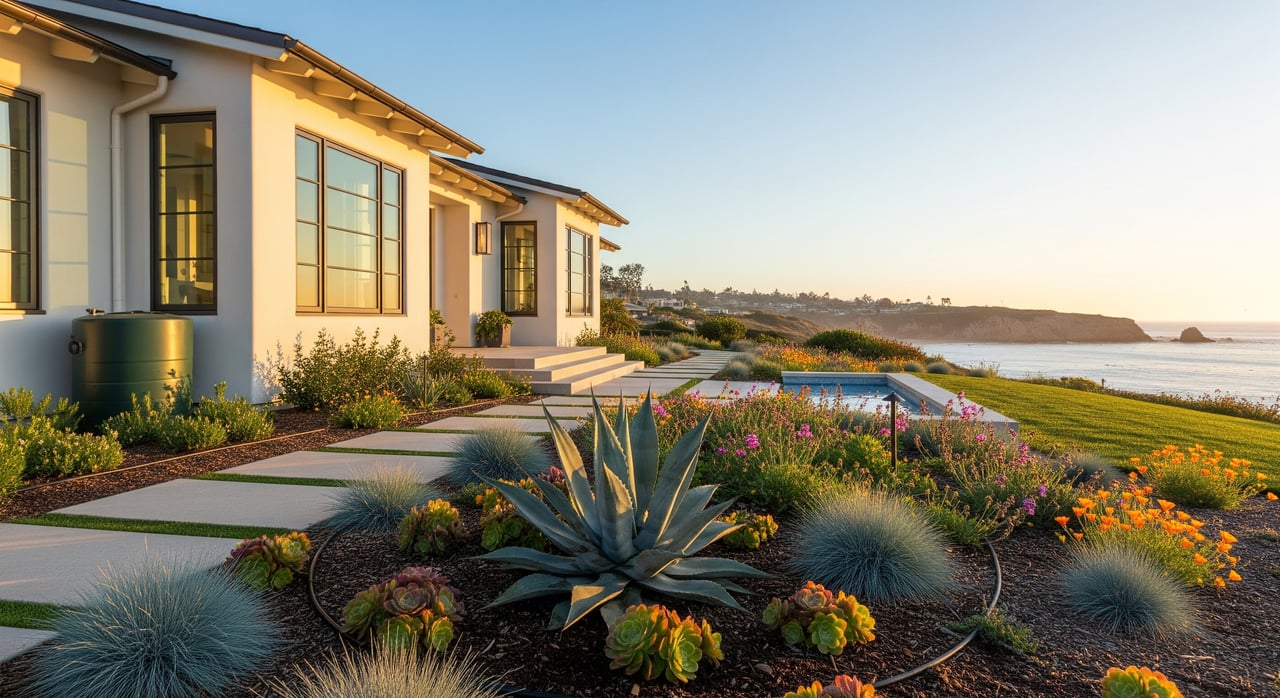
Salt air, marine breezes and only about 10 inches of rain a year shape every yard in Bird Rock. If you want a landscape that thrives without high water bills, you’re in the right place. You can build a coastal garden that resists salt and wind, uses far less water, and still looks stunning year round. In this guide, you’ll learn Bird Rock specific strategies, plant picks, rebates and smart tech to make it happen. Let’s dive in.
Bird Rock’s climate reality
San Diego’s coast sees mild temperatures, foggy summers and limited rainfall, so your landscape must handle long dry stretches with just occasional winter rains. According to the National Weather Service, the region averages roughly 10 inches of rain annually, with warmer, drier trends in recent decades (local climate overview). Salt spray, steady onshore wind and sandy, fast draining soils are common along the Bird Rock bluffs and streets. Plan with these factors in mind to reduce maintenance and water use from day one.
Rules and rebates to know
California’s Model Water Efficient Landscape Ordinance applies to many new or rehabilitated landscapes that are 500 square feet or larger, setting water budgets and requiring soil and mulch best practices (MWELO basics). The City and County offer rebates for turf replacement, trees, smart controllers and rain saving projects, often with pre approval required before you start work (City of San Diego rebates, County Waterscape Program). Weather based irrigation controller incentives are also available through regional programs, with qualifying device lists and varying amounts (controller rebates). San Diego also prohibits irrigation runoff to storm drains, so smart scheduling and onsite capture protect both your bill and coastal water quality (stormwater guidance).
Coastal design principles that work
Hydrozones and layout
Group plants by water needs so you water efficiently. Keep higher water uses, like edibles or showy beds, close to the house and use low water natives and succulents farther out. For plant ideas tailored to coastal San Diego, explore California Native Plant Society guidance and Calscape lists (coastal native garden tips, Calscape coastal list).
Salt, wind and microclimates
Use hardy, salt tolerant shrubs and succulents as a protective front layer, and tuck sensitive plants behind walls or fences. Choose species known to handle coastal exposure so they resist tip burn and wind stress. Thoughtful placement reduces replacements and saves water in the long run.
Soil and mulch basics
In planting areas, incorporate compost where appropriate, then apply 2 to 3 inches of mulch to conserve moisture and suppress weeds. MWELO recommends compost and mulch as part of water efficient design, which also improves soil health over time (MWELO soil guidance). Avoid combustible bark mulch within 0 to 5 feet of structures per defensible space guidance.
Bluffs and erosion
Near bluff edges or on steeper slopes, favor native groundcovers and shrubs that stabilize without heavy irrigation. Avoid lawns at bluff margins and consult coastal resources for resilience considerations in higher risk areas (sea level and bluff context).
Fire wise near structures
If your property borders vegetated open space, follow CAL FIRE defensible space practices, especially the 0 to 5 foot ember resistant zone. This affects mulch selection and plant density next to the home (defensible space basics).
Bird Rock plant palette
Choose nursery grown plants adapted to our coast and avoid wild collection, especially protected succulents like some Dudleya.
Coastal native shrubs and subshrubs
- Ceanothus, or California lilac, selected for the San Diego coast, offers spring color and low water needs (Calscape coastal list).
- Arctostaphylos, or manzanita, thrives in well drained soils and adds sculptural structure (manzanita overview).
- Salvia apiana, S. clevelandii and S. munzii support hummingbirds and pollinators with minimal water once established (S. munzii info).
- Eriogonum, or buckwheat, brings long lasting blooms and habitat value (native plant highlights).
Succulents and coastal accents
- Agave, Aloe and Aeonium handle salt and drought while providing bold forms (regional plant learning).
- Dudleya species are beautiful natives, but purchase only nursery propagated plants and never collect from the wild (Dudleya protection context).
Groundcovers for coverage and stability
- Favor native, non invasive options such as low buckwheats and coastal sedges where feasible. If considering ice plant, note that some species can be invasive inland; choose carefully with an eye on habitat value (groundcover ideas).
Trees used sparingly
- Torrey pine is an iconic native suited to larger properties; site carefully away from bluff edges (Torrey Pines context).
- Other low water choices include Catalina cherry and nonnative olive, placed where roots will not destabilize soil (regional plant learning).
Proven coastal ornamentals
- Rosemary, lavender and lantana perform well in coastal warmth when sited correctly and kept on low water schedules (coastal garden picks).
Smart irrigation and water capture
Drip, sensors and scheduling
Use drip irrigation for beds and bubblers for trees to reduce evaporation and runoff. Pair your system with a weather based smart controller and, if possible, soil moisture sensors to dial in watering and prevent waste. Rebates are widely available for qualifying controllers, which can save thousands of gallons per year depending on your starting point (controller rebates, expected savings overview).
Rain barrels, cisterns and rain gardens
Capture roof runoff in barrels or a cistern for later irrigation, and direct downspouts to rain gardens or dry creek beds sized to your roof area. The County’s Waterscape Rebate Program supports rain saving projects, often requiring that rain gardens infiltrate within a set time and that you secure pre approval before work begins (rain saving rebates).
Graywater basics
Simple laundry to landscape systems are allowed under California code when installed correctly and can irrigate many ornamental beds and trees via subsurface lines. Larger or treated systems require permits and more detailed design, so check with local authorities before moving forward (graywater overview).
Step by step plan for your yard
- Assess your site. Map sun, wind, salt exposure, slopes and drainage. Note proximity to bluff edges and existing irrigation type (rebate program resources).
- Confirm rules and incentives. Check if MWELO applies to your project, then review City and regional rebates. Apply early and do not start work before pre approval where required (MWELO basics, City rebates).
- Design to your microclimates. Hydrozones, salt tolerant natives, succulents and pollinator plants create structure and value with less water (coastal native garden tips).
- Install in the right season. Fall and winter are best for establishing natives. Add compost where appropriate, mulch 2 to 3 inches, and set up drip plus a smart controller.
- Commission and maintain. Tune your controller seasonally, monitor soil moisture and keep rain gardens, gutters and barrel overflows clear (controller best practices).
Costs and ROI expectations
Upfront costs vary by scope. Turf replacement can run roughly 5 to 20 dollars per square foot installed, while a new drip system with a smart controller can range from a few hundred to a few thousand dollars depending on size. Cisterns cost more but provide meaningful nonpotable supply, and rebates can offset a significant portion of costs. Many households see smart controllers pay back within a few years through lower water bills (regional programs overview).
Simple maintenance that saves water
- Inspect drip lines and emitters each season, and adjust schedules after the rainy period.
- Keep 2 to 3 inches of mulch in beds to reduce evaporation, but avoid combustible mulch within 5 feet of structures.
- Prune to maintain airflow and reduce plant stress in salty wind.
- After storms, check rain garden infiltration and direct overflows to vegetated areas away from hardscapes and streets.
- Watch for runoff during irrigation and correct it immediately to meet local stormwater rules.
Ready to boost curb appeal and value?
A water smart, coastal ready landscape is a real asset in Bird Rock. It saves money, reduces maintenance and showcases the lifestyle buyers love. If you’re planning improvements before selling or you want guidance that aligns with your long term home goals, let’s talk. Connect with Quinlan Gaughan Real Estate for neighborhood specific advice and a plan that adds value.
FAQs
What makes Bird Rock landscaping different from inland San Diego?
- Salt spray, steady marine winds, fast draining soils and only about 10 inches of annual rain require salt tolerant, wind tolerant plants and efficient irrigation (local climate overview).
Do I need permits to replace my lawn in Bird Rock?
- Replacing turf alone typically does not require a building permit, but larger new or rehab landscapes may trigger California’s water efficient landscape documentation; always check program rules before starting (MWELO basics).
Are there rebates for smart irrigation controllers in Bird Rock?
- Yes, regional programs offer incentives for qualifying weather based controllers, with amounts and eligibility that vary by agency (controller rebates).
Can I use graywater to irrigate my Bird Rock garden?
- Simple laundry to landscape systems are allowed when installed to code, while larger or treated systems need permits, so confirm local requirements first (graywater overview).
What plants are best for a coastal, low water yard?
- Start with coastal natives like sages, buckwheats and Ceanothus, then add succulents such as Agave and Aloe for structure and salt tolerance (coastal native garden tips, Calscape coastal list).